Many pages say this fellowship is open now. It is not open yet. The official application window opens on 1 November 2026. It closes on 16 December 2026 at 13:00 Central European Time.
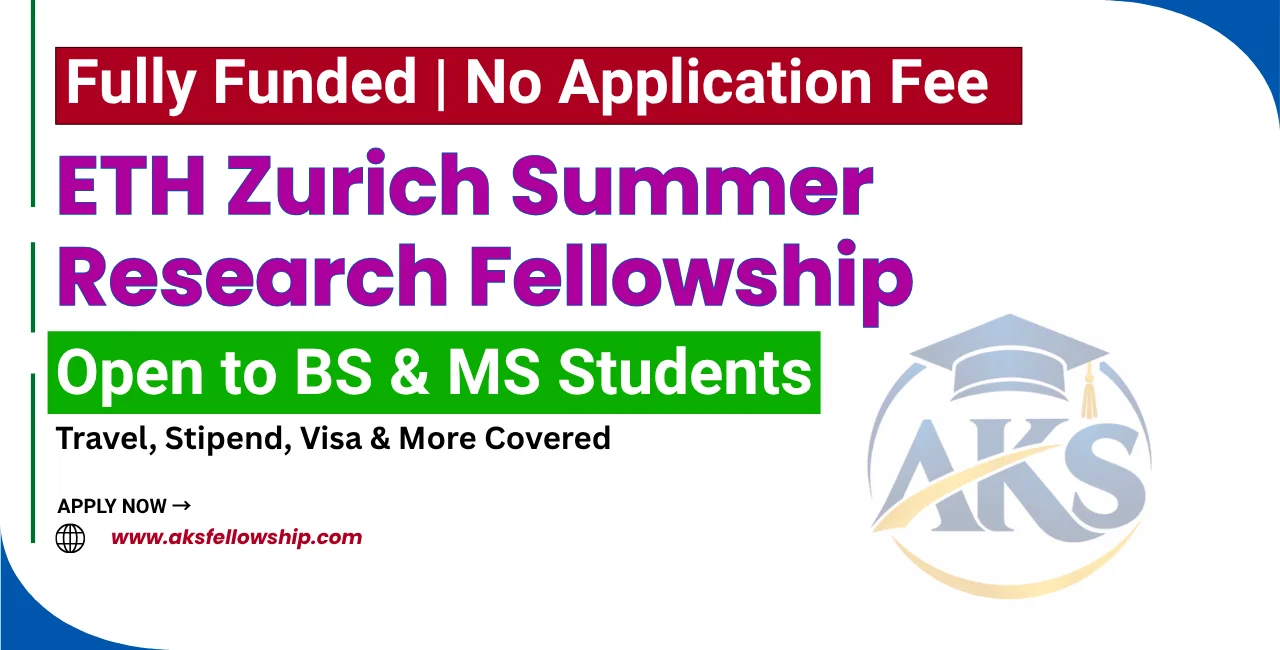
The ETH Zurich Student Summer Research Fellowship (also called the ETH Summer Fellowship) is a two month research internship in the Computer Science Department. You work in a lab on a research project in an area you choose. Fellows receive a CHF 4000 stipend for housing and living costs. Travel and visa costs are covered too.
It is open to bachelor and master students from any country except those already studying at ETH Zurich. One rule catches many students. Your expected graduation must be in the year after the fellowship or later. For the 2027 fellowship that means 2028 or later.
Last Information Checked: 2 November 2026
At a Glance
| Item | Details |
| Programme | ETH Student Summer Research Fellowship (ETH SSRF) |
| Host | Department of Computer Science, ETH Zurich |
| Type | Two month research internship |
| Place | Zurich Switzerland |
| Dates | 2 July to 27 August 2027 (you must be present for the full period) |
| Stipend | CHF 4000 for housing and living costs |
| Travel and visa | Covered |
| Who can apply | Bachelor and master students in computer science or a close field |
| Not open to | Students enrolled at ETH Zurich |
| Language | English (no formal proof needed) |
| Application fee | None stated on the official pages |
| Window opens | 1 November 2026 |
| Deadline | 16 December 2026 at 13:00 CET (12:00 UTC) |
About the ETH Student Summer Research Fellowship
The fellowship gives students their first real research experience. You join a research group in the Computer Science Department at ETH Zurich. The department says it is committed to increasing diversity in computer science.
Professors usually suggest one or more projects to you. If you feel strongly about a certain problem you can raise it when you arrive. You can also mention it in your motivation letter. Every application is judged on its own. The programme says it welcomes many kinds of experience and not only research experience.
The programme runs in English. You do not need to speak German. ETH says more than 30% of people in Zurich are foreigners and English is the common language at ETH.
Research Areas
You pick one or two preferred areas in your application. ETH lists these areas:
- Machine Learning
- Information Security
- Computer Systems
- Robotics
- Programming Languages and Software Engineering
- Bio and Medical Informatics
- Human Computer Interaction
- Theory
- Visual Computing
Dates and Duration
The fellowship runs from 2 July to 27 August 2027. It covers the full two months of July and August. There is no flexibility on the start date. You must be present for the whole period.
Fellowship Benefits
- A stipend of CHF 4000 to cover housing and living expenses
- Travel costs covered. You claim them against receipts at the beginning of the programme.
- Visa costs covered. You must get the visa yourself and the ETH Student Exchange office helps you with the process.
- Help with housing. ETH plans to place fellows in the same student house. The rent is taken from your stipend.
- A stipend that ETH says is enough to live comfortably in Zurich and can cover some weekend travel
- A first research project in a Computer Science Department lab
- A group of fellows from around the world
Also Read: IREX Community Solutions Program 2027: 12-Week Fully Funded US Fellowship
Who Can Apply
- You can be a student of any nationality.
- You are not enrolled at ETH Zurich.
- You are enrolled in a bachelor or master programme in computer science or a close field such as electrical engineering or mathematics or physics.
- Your expected graduation date is in the year after the fellowship or later. For 2027 that means 2028 or later.
- You will have completed two years of study by the start. Master students meet this rule automatically.
- You can be in Zurich for the full period from 2 July to 27 August 2027.
- You have good working English. No IELTS or other formal proof is required. The programme may check your English in an interview.
Required Documents
You upload these as PDF files in the online application. PDF is the only format accepted.
- CV in English in the Europass format
- Official academic transcript from your home university in English or German or French or Italian
- Final bachelor GPA if your first master semester result is not yet available. If you are in your first master semester upload your bachelor transcripts.
- Motivation letter in English of one page at most. Explain why you chose your research area and what you hope to achieve at ETH. Say how it supports your academic or career goals. ETH says half a page can be enough.
ETH does not accept self made transcripts or screenshots of student portals. Translations must come from the university that issued the document or from an authorised professional translator. Use the grading system your university uses. Do not upload password protected PDFs.
Key Dates
- 1 November 2026: Application window opens
- 16 December 2026 at 13:00 CET: Deadline (12:00 UTC and 5:00 pm Pakistan time)
- End of February 2027: Decisions sent by email
- 2 July to 27 August 2027: Fellowship in Zurich
How To Apply
- Read the official How to apply page before you start.
- Explore the faculty members and research topics. Choose one or two research areas.
- Prepare all your documents as PDF files.
- Register on SiROP. Joining your university affiliation there is not required.
- Open the official application link once the window opens on 1 November. Click Apply now.
- Fill in your personal data. Find your university in the dropdown list. Write only your name in the name field and do not use capital letters only.
- Upload every document and submit before 16 December 2026 at 13:00 CET.
Only complete applications are considered. The portal does not allow documents after the deadline. A submitted application cannot be changed. ETH does not extend the deadline. Do not apply in the last minutes.
Shortlisted candidates may be invited to an interview as the last step.