Journalism ethics is usually taught through case studies, newsroom discussions and professional codes of conduct.
FASPE teaches it differently.
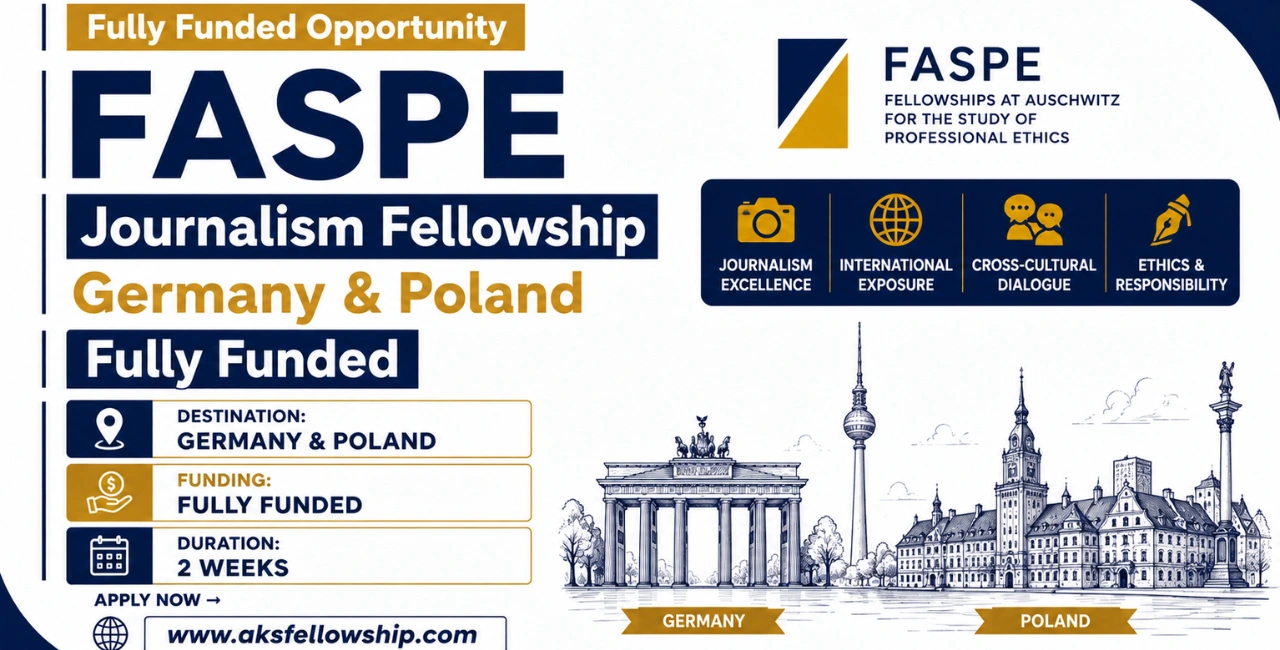
The Fellowship at Auschwitz for the Study of Professional Ethics takes a small cohort of early-career journalists to Berlin and Poland. It places them in the locations where Nazi-era press failures actually happened and asks them to examine those failures honestly before turning the same lens on the profession today.
It is an unusual premise. It is also one of the most intellectually serious journalism fellowships available to emerging professionals anywhere in the world.
The FASPE Journalism Fellowship 2027 program runs from 18 June to 2 July 2027. Applications are open now. The deadline is 3 January 2027.
At a Glance
| Detail | Information |
|---|---|
| Fellowship | FASPE Journalism Fellowship 2027 |
| Location | Berlin Germany and Poland |
| Program dates | 18 June to 2 July 2027 |
| Duration | 2 weeks |
| Cohort size | Approximately 13 to 16 fellows |
| Funding | Fully funded |
| Who can apply | International Journalism students |
| Experience limit | Generally not |
| Application deadline | 3 January 2027 |
The Fellowship Experience 2 Weeks in Berlin and Poland
Thirteen to sixteen fellows spend the program attending daily seminars, visiting historically significant sites and participating in discussions that move between the historical and the contemporary.
The cohort is deliberately small. With fewer than sixteen participants, fellows engage closely with faculty and with each other rather than sitting in large lecture style sessions.
Journalism fellows also travel alongside participants from other FASPE programs medical fellows and clergy fellows which creates genuinely interdisciplinary conversations about professional responsibility across different fields.
A journalist and a doctor examining the same historical failure from different professional perspectives produces a kind of discussion that single discipline programs rarely generate.
Beyond the formal seminars, the program creates space for informal conversation and reflection. Some of the most useful exchanges in intensive fellowship programs happen outside scheduled sessions.
Topics Fellows Examine
The program covers a wide range of ethical questions directly relevant to working journalists in 2027:
- The complicity of journalists in Nazi policies through inadequate or distorted reporting
- Technology’s impact on journalism and editorial decision making
- The role of journalists in electoral politics
- Accountability journalism and holding power responsible
- The ethics and boundaries of advocacy journalism
- Normalizing unacceptable behavior through media framing
- Reporting in environments shaped by misinformation and accusations of fake news
- Access tactics and ethical boundaries with institutions and powerful individuals
These are not abstract academic discussions. Each topic connects directly to decisions journalists make today.
Fellowship Funding/Coverage
FASPE’s position is straightforward. Financial ability should not determine who participates in its programs.
The fellowship is fully funded. FASPE does not publish a detailed breakdown of exactly which costs are covered so applicants should verify the specific financial provisions directly through the official program portal before applying.
Who Qualifies And the Detail Most Applicants Miss
- The fellowship is mainly for early-career journalists, not experienced journalists looking for a sabbatical.
- You may be eligible if you are:
- Studying in a graduate program, planning to become a journalist, and have some journalism experience, including college newsroom work.
- A bachelor’s graduate who is currently working as a journalist.
- A graduate degree holder who is currently working as a journalist.
- FASPE prefers applicants whose work has already been published or aired by a recognized news organization.
- Student journalism experience is accepted, but professional published work can make your application stronger.
- Applicants generally should have 10 years or less of total professional experience.
- The 10-year limit is not always a strict cutoff, but it shows that FASPE mainly wants journalists who are still at the beginning of their careers.
- If you are close to the 10-year mark, carefully check the official eligibility rules before applying.
After the Fellowship
FASPE Journalism Fellows go on to work across media and communications as reporters, editors, photojournalists, nonfiction writers and broadcasters.
The professional network built during the two weeks extends beyond journalism. Fellows leave with connections across medicine, religious leadership and other professional fields represented in the wider FASPE cohort.
For early-career journalists still building their professional footprint, that breadth of connection has value that is difficult to replicate through journalism-only programs.
How to Apply and What to Do Before 3 January
The application is open now through FASPE’s official fellowship portal. The deadline is 3 January 2027 at 11:59 PM Eastern Time. That is a firm deadline with a specific time attached not a rolling window.
Before starting the application, read the official eligibility requirements in full. The program is selective. With only 13 to 16 spots available each year, competition is meaningful.
A strong application typically demonstrates:
- Published or aired journalistic work with recognized outlets
- Clear thinking about professional ethics and editorial responsibility
- A specific reason why this program at this point in your career is the right fit
- Career stage that genuinely fits the early-career profile FASPE is looking for